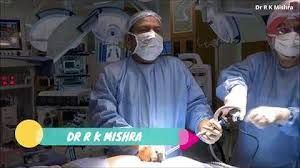
Robotic Inguinal Hernia Repair in Female Patient | Step-by-Step Surgery by Dr. R.K. Mishra
Add to
Share
266 views
Report
1 month ago
Description
The Convocation Ceremony at World Laparoscopy Hospital (WLH) represents the culmination of intensive training, advanced surgical education, and hands-on exposure to modern minimally invasive and robotic surgical techniques. An important academic highlight associated with the program is the demonstration of Robotic Inguinal Hernia Repair in a Female Patient, performed step by step under the expertise of Dr. R.K. Mishra. Robotic inguinal hernia repair is an advanced minimally invasive approach that combines high-definition three-dimensional visualization, articulated robotic instruments, tremor filtration, and precise intracorporeal dissection. These technological advantages can be particularly valuable when operating within the confined anatomical planes of the groin, where accurate identification of important structures and meticulous mesh positioning are essential. During the surgical demonstration, emphasis is placed on a systematic step-by-step operative technique. The procedure begins with appropriate patient positioning, safe abdominal access, robotic port placement, docking, and systematic inspection of the inguinal region. The operative anatomy is carefully demonstrated so that participating surgeons can understand the relationship between the hernia defect, inferior epigastric vessels, Cooper's ligament, myopectineal orifice, round ligament, iliopubic tract, and surrounding structures. The peritoneal flap is developed with controlled robotic dissection, followed by identification and adequate exposure of the relevant anatomical landmarks. Particular attention is given to maintaining the correct tissue plane, minimizing unnecessary tissue trauma, achieving adequate parietalization, and creating sufficient space for proper prosthetic coverage of the entire myopectineal orifice. Once adequate dissection has been completed, an appropriately sized mesh is positioned to provide broad coverage of potential direct, indirect, and femoral hernia sites. The robotic platform facilitates controlled manipulation and accurate deployment of the prosthesis. The peritoneal flap is subsequently closed to separate the mesh from the intra-abdominal viscera and restore the peritoneal barrier. Throughout the demonstration, Dr. R.K. Mishra highlights operative anatomy, robotic ergonomics, instrument selection, surgical judgment, prevention of complications, and practical technical modifications that can help surgeons perform robotic hernia repair in a structured and reproducible manner. The academic session complements the WLH Convocation Ceremony, where participating surgeons and gynecologists celebrate the successful completion of their advanced minimally invasive and robotic surgery training. The occasion reflects not only the awarding of certificates but also the transition of structured laboratory and clinical training into practical surgical skills.
Similar Videos