Laparoscopy vs. Open Surgery: What Evidence Really Shows – Insights from Dr. R. K. Mishra
Add to
Share
861 views
Report
10 months ago
Description
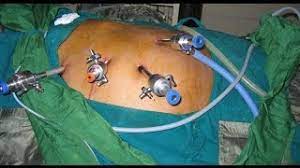
The debate between laparoscopy and open surgery has shaped modern surgical practice for decades. With continuous advancements in minimally invasive technology, surgeons worldwide are shifting toward laparoscopy for safer, faster, and more effective surgical outcomes. Dr. R. K. Mishra, a global leader in laparoscopic and robotic surgery training, offers deep insights backed by evidence, clinical experience, and scientific data that highlight why minimally invasive surgery is becoming the new gold standard. What Makes Laparoscopy Different? Laparoscopy uses small incisions—typically 5–10 mm—through which a camera and fine instruments are inserted. In contrast, open surgery requires a much larger incision to access the surgical site. This difference in approach leads to significant variations in trauma, pain, recovery, complications, and overall patient experience. 1. Smaller Incisions Mean Faster Recovery According to multiple international studies, laparoscopic procedures reduce tissue trauma by minimizing incision size. Dr. Mishra explains that smaller incisions result in: Less postoperative pain Lower need for pain medications Faster return to normal activities Reduced scarring and better cosmetic results Patients often resume work 2–3 times faster than after open surgery. 2. Lower Risk of Postoperative Complications Open surgery exposes internal organs directly to the external environment, increasing the chances of: Wound infection Hernia formation Fluid accumulation Postoperative ileus Evidence from randomized controlled trials shows that minimally invasive surgery significantly reduces infection rates due to minimal tissue handling and closed surgical fields. Dr. Mishra emphasizes that this benefit is especially important in procedures like appendectomy, cholecystectomy, hernia repair, and gynecological surgeries. 3. Enhanced Visualization with HD and 4K Cameras One of the greatest advantages of laparoscopy is the magnified view of internal structures. Modern systems offer: 10–20x magnification 4K resolution clarity Enhanced identification of vessels, ducts, and anatomical planes Dr. Mishra highlights that this superior visualization often makes laparoscopic surgery more precise than open surgery, reducing accidental injuries and improving surgical accuracy. 4. Less Blood Loss, More Surgical Precision Due to controlled dissection and magnified vision, laparoscopy leads to: Reduced intraoperative bleeding Better hemostasis Lower need for blood transfusions For patients with comorbidities such as diabetes or hypertension, this advantage becomes even more critical. 5. Shorter Hospital Stay and Lower Cost in the Long Run While laparoscopic equipment may increase initial surgical cost, overall expenditure is lower due to: Shorter hospitalization Faster recovery Early return to work Fewer postoperative complications Dr. Mishra’s own clinical experience at World Laparoscopy Hospital supports the finding that laparoscopy significantly reduces long-term healthcare burden. 6. Is Open Surgery Still Needed? Yes — in Select Cases Despite its advantages, laparoscopic surgery is not suitable for every situation. Open surgery may be preferred when: The patient has severe organ adhesions There is uncontrolled bleeding Advanced malignancy requires extensive dissection Laparoscopic instruments cannot access certain anatomical areas Dr. Mishra stresses that the best surgeons master both techniques and choose the safest option based on patient condition. 7. The Future: Minimally Invasive and Robotic Surgery With robotic systems like Da Vinci and advanced 3D laparoscopy, surgical precision continues to evolve. Dr. Mishra predicts that future operating rooms will be dominated by: Robotic-assisted surgeries Artificial intelligence–based guidance Virtual reality training modules Smaller and smarter surgical instruments The evidence clearly shows the world is moving toward minimally invasive excellence. Conclusion The data, global research, and real-world results confirm a simple truth: Laparoscopy offers superior outcomes for most surgical procedures compared to open surgery. Through the expertise and leadership of pioneers like Dr. R. K. Mishra, the surgical community continues to transition toward techniques that prioritize patient comfort, safety, and rapid recovery. Minimally invasive surgery is not just a trend—it is the future of surgical care.
Similar Videos