Global Surgeons & Gynecologists Share Their WLH Training Experiences | Testimonials
Add to
Share
6 views
Report
2 hours ago
Description
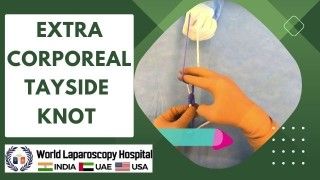
Discover why surgeons and gynecologists from different countries choose World Laparoscopy Hospital (WLH) to advance their knowledge and practical skills in laparoscopic and robotic surgery. This testimonial video brings together the voices of medical professionals who share their training experiences, learning journeys, and impressions of the educational environment at WLH. Their perspectives offer an insight into the value of structured surgical education, hands-on practice, faculty mentorship, and international academic exchange. Surgical education continues throughout a doctor's professional career. As minimally invasive techniques and robotic platforms evolve, surgeons and gynecologists must continually strengthen their technical abilities, update their knowledge, and learn how to apply surgical innovations responsibly. Advanced training programs provide an opportunity to revisit fundamental principles, practice specialized skills, and explore new approaches relevant to clinical practice. Why Doctors Choose World Laparoscopy Hospital World Laparoscopy Hospital is dedicated to laparoscopic and robotic surgery education, clinical practice, and research. Founded by Prof. Dr. R.K. Mishra, the institution offers educational programs designed for surgeons and gynecologists interested in developing their expertise in Minimal Access Surgery. Its international training environment brings together medical professionals from diverse backgrounds and specialties. The decision to pursue advanced training often reflects a doctor's desire to improve technical proficiency, gain familiarity with modern surgical equipment, and strengthen confidence through structured learning. This video highlights those motivations through trainee testimonials. Hands-On Learning and Surgical Skill Development Laparoscopic surgery requires a different set of technical skills from conventional open surgery. Surgeons must work with a camera-based view, coordinate instruments through small ports, understand the limitations of two-dimensional or three-dimensional visualization, and maintain controlled movements within a restricted operative field. Structured skills practice can help trainees develop: Camera navigation and instrument coordination. Hand-eye coordination and laparoscopic ergonomics. Intracorporeal suturing and knot tying. Controlled tissue handling and dissection. Familiarity with laparoscopic instruments and energy devices. Awareness of operative anatomy and patient-safety principles. Training opportunities vary by program and should be understood in the context of the specific curriculum. Repeated practice, instructor feedback, and competency assessment remain important for developing reliable technical skills. Advancing Robotic Surgery Knowledge Robotic surgery has introduced new approaches to visualization, instrument articulation, ergonomics, and operative control. For surgeons and gynecologists seeking robotic education, structured training may include console familiarization, camera control, instrument handling, simulation exercises, suturing, and coordination with the bedside team. World Laparoscopy Hospital offers laparoscopic and robotic surgery training, including programs associated with the da Vinci surgical platform. The value of this education lies in understanding the technology alongside its indications, limitations, and safety requirements. Robotic platform familiarity alone does not establish independent operative competence. Clinical readiness also requires appropriate supervision, procedural experience, institutional credentialing, and sound surgical judgment.
Similar Videos